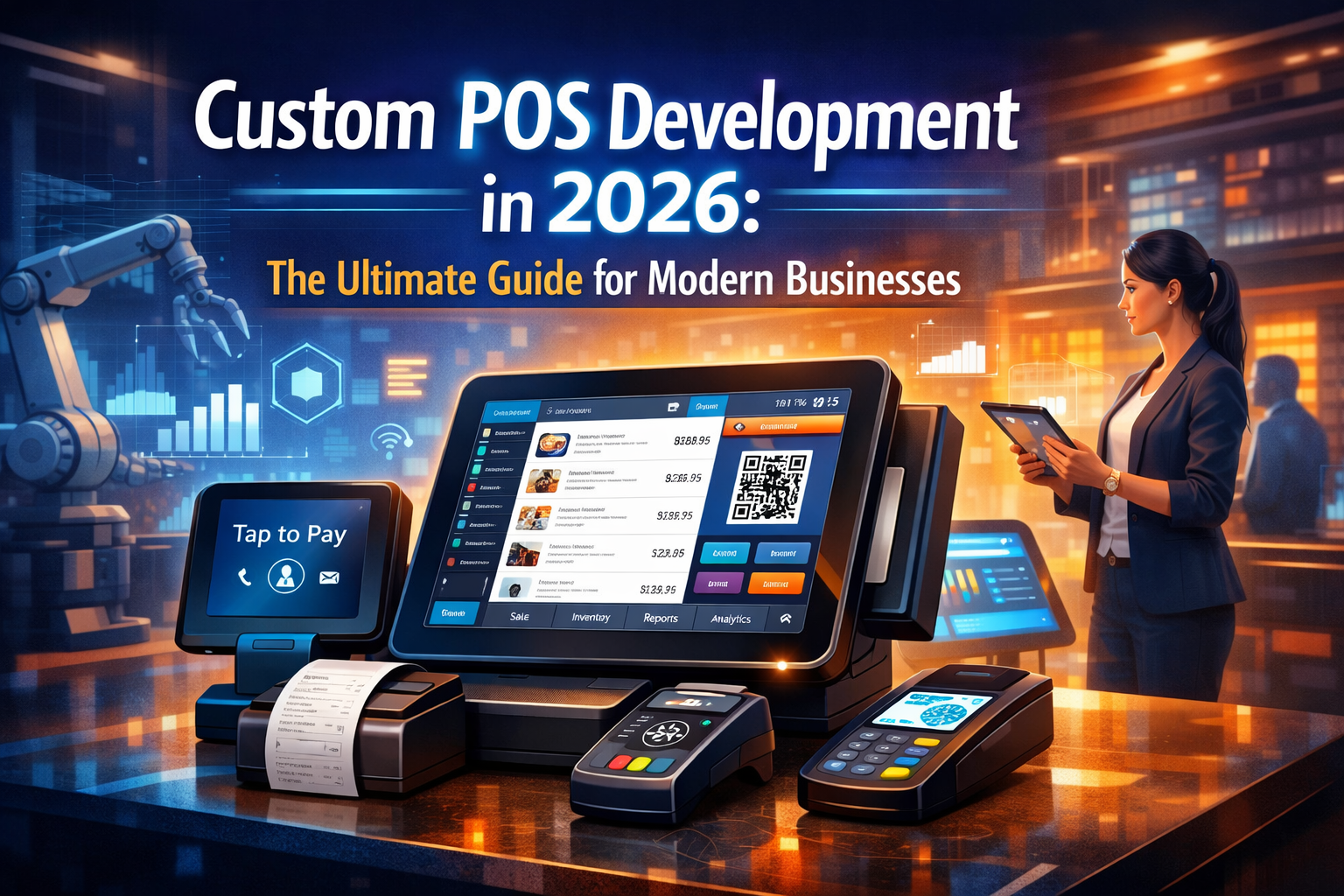
In today’s fast-paced retail and service industry, businesses need more than just a billing system—they need a smart, scalable, and customized POS solution.
That’s where Custom POS Development comes in.
Whether you’re running a retail store, restaurant, or enterprise chain, a tailored POS system can streamline operations, improve customer experience, and boost profits.
🔍 What is Custom POS Development?
Custom POS (Point of Sale) development involves creating a tailored billing and business management system designed specifically for your business needs.
Unlike off-the-shelf POS software, custom solutions offer:
- Personalized features
- Better scalability
- Seamless integration
- Full control over operations
🚀 Why Custom POS Systems Are Trending in 2026
1. Business-Specific Solutions
Every business is different—custom POS adapts to your workflow.
2. Better Customer Experience
Faster billing and personalized service improve satisfaction.
3. Integration with Modern Tech
Connect with:
- Inventory systems
- CRM tools
- Payment gateways
- Mobile apps
4. Scalability
Easily expand as your business grows.
🛍️ Top Use Cases of Custom POS Systems
🏬 Retail Stores
- Inventory management
- Barcode scanning
- Sales tracking
🍽️ Restaurants & Cafes
- Table management
- Order tracking
- Kitchen integration
🏪 Supermarkets
- Bulk billing
- Multi-location management
- Real-time stock updates
💼 Enterprise Businesses
- Advanced analytics
- ERP integration
- Multi-user control
🛠️ Key Features of a Custom POS System
- 🧾 Fast billing & invoicing
- 📦 Inventory management
- 📊 Sales analytics & reports
- 💳 Multiple payment integrations
- 📱 Mobile POS support
- 🔐 Secure transactions
- 🌐 Cloud-based access
⚙️ Custom POS Development Process
Step 1: Requirement Analysis
Understand business operations and needs.
Step 2: UI/UX Design
Create an easy-to-use interface.
Step 3: Development
Build custom features and integrations.
Step 4: Testing
Ensure smooth performance and accuracy.
Step 5: Deployment
Launch the POS system.
Step 6: Maintenance & Updates
Provide ongoing support and improvements.
💰 Custom POS Development Cost in 2026
| Project Type | Estimated Cost (USA Market) |
|---|---|
| Basic POS System | $5,000 – $15,000 |
| Mid-Level POS | $15,000 – $40,000 |
| Advanced Enterprise POS | $40,000 – $120,000+ |
💡 Cost depends on:
- Features & complexity
- Integrations
- Platform (desktop/mobile/cloud)
- Security requirements
🚧 Challenges in POS Development
- Hardware compatibility
- Data security
- Real-time syncing issues
- User adoption
👉 Choosing an experienced POS developer solves these efficiently.
🏆 Why Choose CustomPOSDeveloper?
At CustomPOSDeveloper, we create powerful POS solutions tailored for your business.
✔️ Our Expertise:
- Retail POS systems
- Restaurant POS solutions
- Cloud-based POS
- Mobile POS apps
- Payment gateway integration
✔️ What Makes Us Different:
- Custom-built solutions
- Scalable architecture
- User-friendly design
- Dedicated support
🔮 Future of POS Systems
The POS industry is evolving with:
- AI-powered analytics
- Contactless payments
- Cloud & mobile POS
- IoT integration
- Voice-enabled systems
Businesses adopting modern POS systems will stay ahead of the competition.
📢 Final Thoughts
A custom POS system is not just a tool—it’s the backbone of your business operations.
If you want to improve efficiency, enhance customer experience, and scale your business, investing in custom POS development is the right move in 2026.
❓ FAQs (SEO Boost Section)
Q1. What is a custom POS system?
A POS system designed specifically for a business’s unique needs.
Q2. How long does it take to build a POS system?
Typically 1–4 months depending on complexity.
Q3. Is custom POS better than ready-made software?
Yes, it offers flexibility, scalability, and better integration.
Q4. Can POS systems work offline?
Yes, many systems support offline mode with data sync.
Q5. Which businesses need custom POS?
Retail, restaurants, supermarkets, and enterprises benefit the most
Comments